If you trade futures actively, you’ve probably seen this pattern:
Price hits a key level.
The candle looks “clean.”
And then the next move feels random.
A lot of the time, it’s not random. It’s just that candlesticks don’t show participation, who actually traded, how aggressively, and where liquidity was sitting.
That’s where volume and order flow help: they add context so you can make better decisions around entries, exits, and “do nothing” moments.
Not as a magic signal. Not as a new strategy you have to adopt overnight. Just as a layer of context that can make your decisions calmer and more informed, especially around high-activity moments.
Why volume matters in futures (even if you don’t “trade volume”)
The simplest way to think about volume is this: it tells you whether a price move had real involvement behind it.
When volume is building at a price, the market is doing business there. That often creates “acceptance” a zone the market is willing to trade around. When volume is thin and price snaps away quickly, it can be a sign of “rejection” a price the market didn’t want to spend time at.
This matters because many trading decisions happen at exactly those moments: at key levels, during session opens, around news, or when a trend is either continuing or running out of fuel. Candles can show you what happened. Volume helps you understand how it happened.
What “order flow” actually means in practice
Order flow is just a clearer view of what’s happening inside the market in real time.
Instead of only seeing candles, you’re looking at how trades are printing, where liquidity is sitting, and whether buying or selling pressure is dominant at specific prices. In practical terms, that includes things like Time & Sales (the tape), Depth of Market (the order book), and delta (the balance between market buys and market sells).
This isn’t about turning trading into a science project. It’s about reducing guesswork when it matters most.
For example: a market can push up on a candle, but if the tape shows aggressive buying getting absorbed by large resting liquidity, that move might be weaker than it looks. Or price can drop quickly, but if the move happens through thin liquidity, it may be more of a “vacuum” move than genuine selling strength. These are the kinds of nuances candlesticks don’t always reveal.
The three questions order flow helps you answer
When traders start using order flow tools, they usually aren’t hunting for “signals.” They’re trying to answer three simple questions more confidently:
Is this level being accepted or rejected?
Is the move driven by real aggression, or is it being absorbed?
Is price moving through liquidity or into it?
Even basic visibility into those questions can improve timing, stop placement, and trade management. Sometimes it also improves something even more valuable: your ability to sit on your hands and not force trades in unclear conditions.
A quick note on pricing and execution (why testing matters)
If you’re trading futures actively, costs aren’t just one number. Your real cost often includes broker fees, exchange fees, and in some cases regulatory fees.
That’s why the most realistic way to evaluate a setup is not only reading a pricing page, but testing your workflow with small size. Can you execute smoothly? Is the fee structure clear? Do you understand what you’re paying per contract round trip?
Clarity matters because it helps you plan. Uncertainty erodes trust and trading is hard enough without that layer.
Where ATAS fits: turning order flow into something you can actually use
ATAS (Advanced Trading Analytical Software) was built specifically for this: helping futures traders interpret volume, liquidity, and order flow without having to guess.
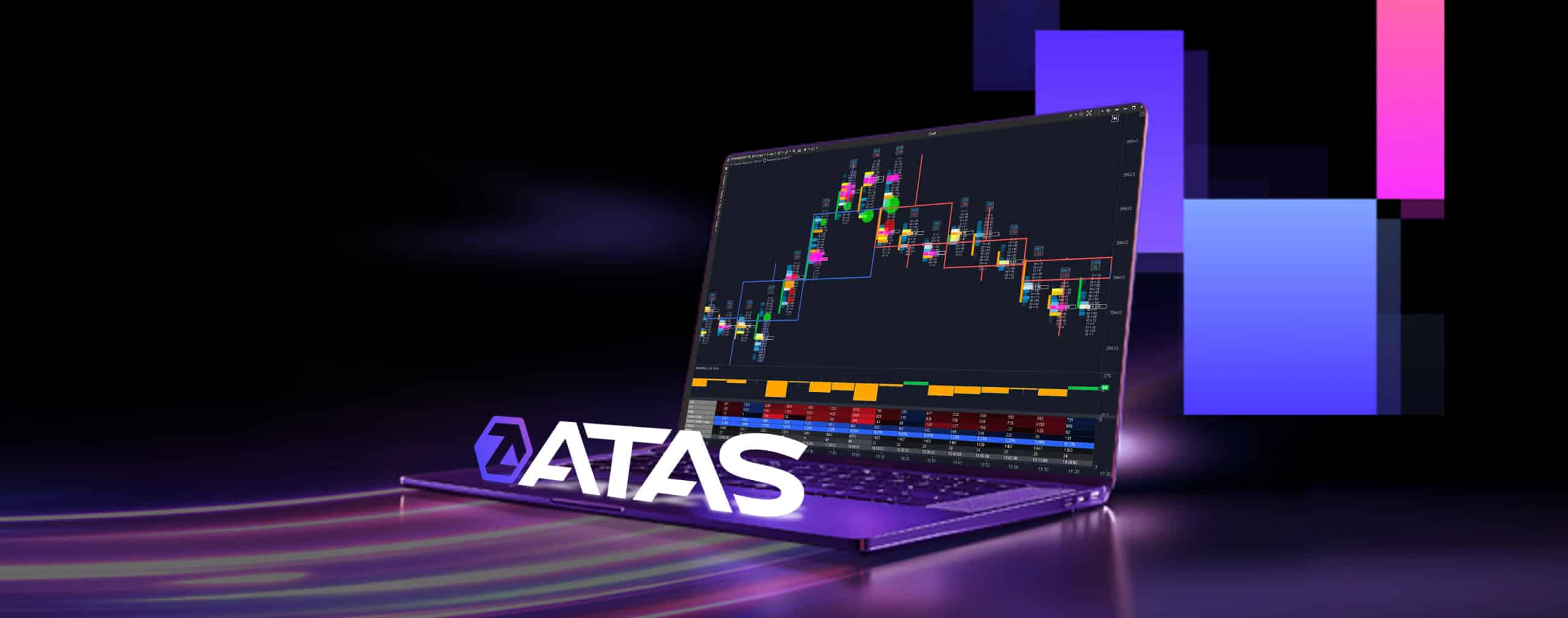
Instead of staring at raw numbers, ATAS converts the tape, the order book, and volume behavior into visuals traders commonly use: footprint/cluster views that show volume inside the bar, delta tools that highlight buy/sell imbalance, volume profile that shows where business is actually being done, and DOM tools that help you monitor liquidity shifts around key prices.
You can still keep your existing technical framework. ATAS doesn’t require you to abandon it. It just gives you better context when you’re making decisions.
The practical way to try it: ATAS Ultra free for 30 days via AvaFutures
Learning order flow is easiest when you have a real window to explore the tools in live market conditions, without committing upfront.
That’s the idea behind the ATAS x AvaTrade offer: AvaFutures clients can access ATAS Ultra free for 30 days using an MT5-connected account, so you can see order flow, volume, and liquidity in real time during the trial period.
There’s also a practical bonus for testing: depending on your first deposit level, you can unlock up to 100 commission-free futures trades (broker fee only). That makes it easier to evaluate execution and your workflow costs while you explore ATAS. (Other fees such as exchange/NFA still apply.)
If you want to set it up, the process is straightforward: create an ATAS account, install the platform, open or log in to AvaFutures, connect via MT5, and you’re ready to explore the Ultra features during the trial.
Open an AvaFutures account and claim your free 30-day ATAS Ultra licence → Register Now
Register an ATAS account → Here

